
The Boy and the River: The River Poet and the Art of Living
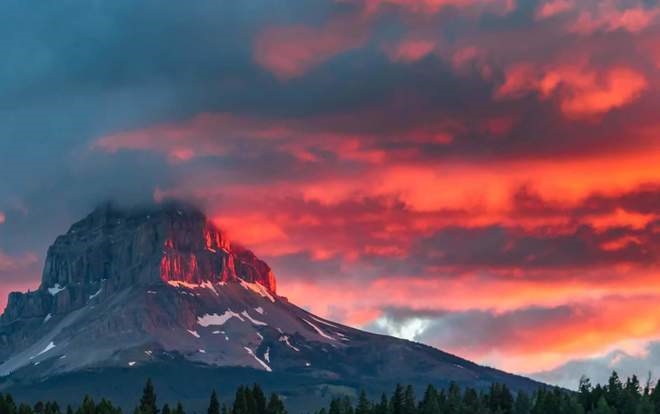
Is the outdoor lifestyle a choice or a condition of connection that is embedded in your epigenome or DNA? In my experience the river and nature have defined my lifestyle; in fact, the river has defined my life. If there are “River People”, I would consider myself one of them. My connection to the river developed from my earliest years and continues to evolve even today. Such a connection started from early childhood exposure to a river and the development of lived relationships with many rivers that defined who I am, how I live, and where I live.
My outdoor lifestyle evolved experientially from the complex intersection of enduring values, lifelong dreams, and fervent aspirations developed in an outdoor environment. To me, lifestyle, a metaphor for the river, is unconsciously crafted from life’s vibrant abstractions, assiduous dreams, and turbulent attributions. Life’s contrasts, like those of the river’s, are formidable: soft and hard, placid and raging, easy and difficult. The middle way through life is hard to discover, but it is present if you look deep enough. To find life’s middle way is like finding the best route down a turbulent rapid. The smoothest life path and best way to descend a rapid is the middle way; following the safest chosen route that takes you around obstacles that form life’s rapids and then accepting the consequences of your decisions.
My river life influences me profoundly. The rivers sing to me. Their energies, colours, sizes, textures, sounds, and smells speak to me like poetic verse. The generous gift of the flowing river is the rich personification of their shared experiences; the gift of the poem is the expression of lived river experiences wealthy in verses personified. But how do the river and the poem connect to my lifestyle? Let me start with a poem, and a story: then, you will see.
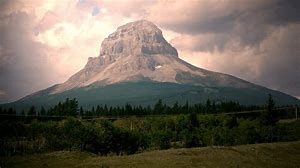
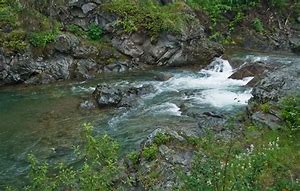
It was here in the dry washouts along the stony river bank where I would spend hours excavating the ancient fossils of Diplodocus and Tyrannosaurus Rex. I would piece together the skeletal remains with the precision of a four-year-old. During the evenings my parents would inquire what I had been doing all day, and I would tell them collecting dinosaur bones. They smiled.
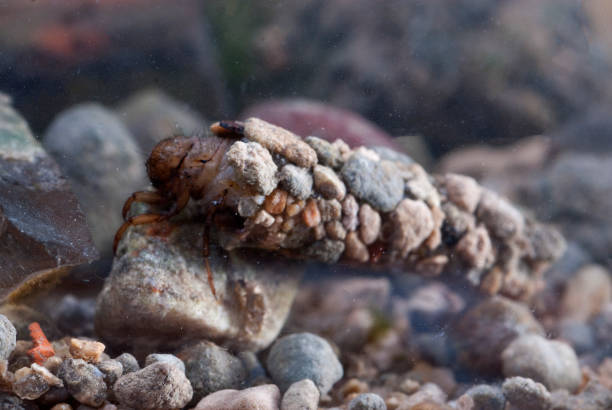
The Carbondale River was very interesting in other ways, too. I remember watching the Caddisfly larvae, encased in sand, small pebbles, twigs, and Lodgepole Pine needles, crawling along the backside of the smooth, almost spherical, river stones to avoid the strong currents. They seemed to feed on some invisible, but nourishing food. I would spend hours watching and collecting them for closer observation. The larvae appeared to need the weight of their stone covered exoskeletons to anchor their soft bodies to the protective substrate to resist the dynamic forces created by the river’s turbulent flow. We were alike, the Caddisfly larva and I; anchored against the turbulent flow of life.
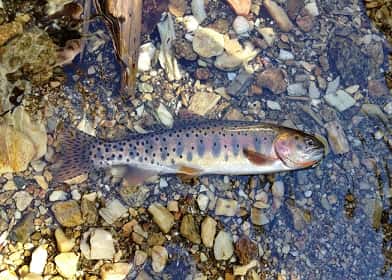
I was also very curious about the trout. The trout seemed to collect in the deep pools below the ledges and falls in the rapids to avoid the cascading waters or perhaps to take rests from swimming in the relentless turbulence while looking for food. I wondered if they ate the Caddisfly larvae. One memorable day my Dad made me a fishing pole. To a stick he tied a piece of fishing line, to the end of the line he attached a paper clip for a hook, and then baited the hook with one large glorious red salmon egg. I was delighted, for I had been nagging Dad to go fishing for months, and this was likely his most immediate solution to stop me from the endless asking. I tried fishing near the trailer, but the river was too shallow and fast, so I packed up my rod and prepared to head downstream to the “fishing spot”, as my Dad’s summer student, Ron, called it. So, as soon as Dad’s attention was elsewhere, as it usually was, I headed for the best fishing hole on the river. Half-an-hour later I arrived at the clear placid turquoise pool. The rush of cold cascading melt-water momentarily paused as the glacial melt dropped over a series of ledges into this small fish-filled basin. I remember a man from the newly constructed campground concernedly asking me if my parents knew where I was. It must have seemed odd to him that a small boy with unusual fishing gear would appear out of the thickets growing along the river. This was my first time fishing, and I was determined to catch a beautiful fine-scaled trout. I had never really considered telling my parents where I was going, as this was not my habit. However, I was eventually missed and created some parental worry. I was eventually located by, Ron, my Dad’s summer student and reunited with my distraught parents. My first fishing adventure was a lesson in letting your parents know where you are going no matter what. I am still very adventurous.
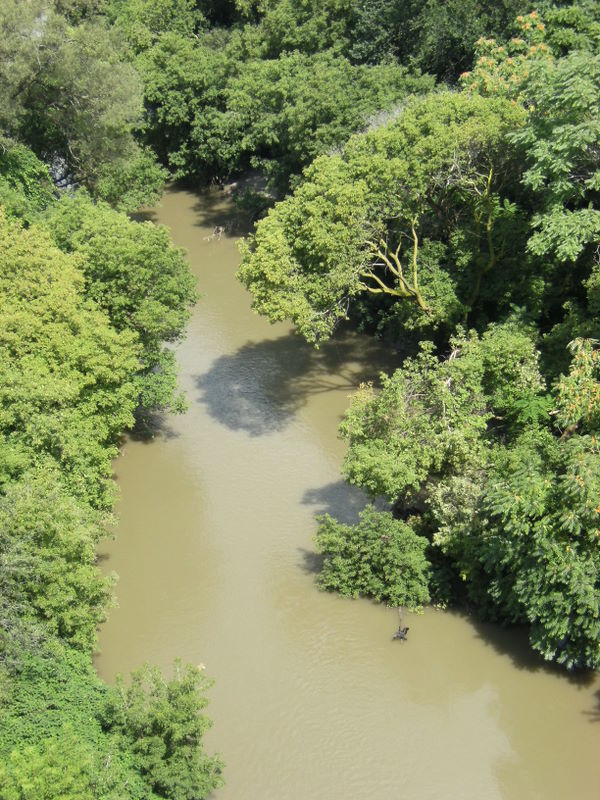
Somehow my parents ended up in Toronto. My Dad was teaching at the University of Toronto, and I was looking for the river. Our house was newly constructed on Willesden Road, North York. In the mid-1960s there was plenty of open space with the plethora of vacant farmland being gradually developed by the suburban creep. It took me a month to discover the river. To accomplish this enduring task I had to cross Willesden Park, get into the high tension power-line, then hike west about a kilometre until I discovered the muddy headwaters of the Don River. This was nothing like the clear cold Carbondale River; instead, it had precipitous silt banks and warm dark sediment-filled water. However, the Don River was full of baby snapping turtles, which enamoured my boundless curiosity. My parents probably wondered why I would return home muddied and smiling after my daylong weekend absences. But as long as I made it home for supper, they seemed content that I had profited from the day.
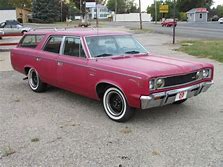
My last summer in the mountains was 1969. My Dad and I drove the new red Rambler Wagon west for his last field season in the mountains. This was the best shared time Dad and I had together. I am so very glad we were able to road trip that summer. That same summer, I said goodbye to the Carbondale River. I have never been back.
The Road Trip of 1969: Red Rambler

When I was 7; years ago
I went road-tripping with Dad
From Toronto to the Crow
In the old Rambler Wagon, we had

The bright red Rambler Wagon
Was our home for many days
A night we slept like Hobos
Crashed out on seats lengthways

We stopped at many parks
And camped along the way
We toasted Salami sandwiches
Chased Black Fly swarms away

We laughed and sang all kinds of songs
Like good old buddies do
We saw cool things; could do no wrongs
‘Cause we had gum to chew

The love I felt, the joy, the bliss
He was my father; my Dad
He cared for me without remiss
For I was all he had

It’s Rainbow Falls and Quetico
That I remember best
We likely passed by Thunder Bay
As we headed for the west

We passed the Sleepee Teepee
We saw the Coleman slide
My eye got kind of weepy
When I learned the whole town died

To Crowsnest Pass and Blairmore
In the mountains of the West
To the Carbondale River’s roar
We drove like on a quest

My Mom, my brother, and my sisters
Would get there on the train
We lived in an old trailer
In that mountainous terrain

In the mountain shadow
By a river, in the pines
As kids, we summered long ago
And had some real good times
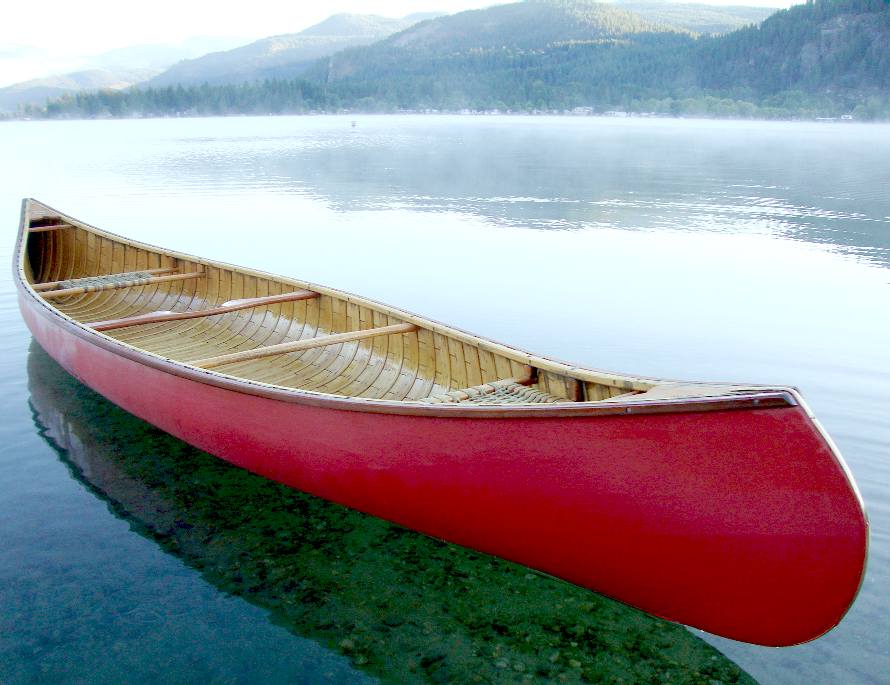
One day in 1970 my father came home with a red 16-foot cedar stripe and canvas canoe. It was glorious. The hull was painted fire truck red, the bow and stern decks had been varnished to a glisten and the cedar ribs where a warm light yellow colour. This was our first canoe and I badly wanted to go paddle on the water: any water! I was hooked to the point of abstraction and likely drove Dad nuts from asking him a million times to go canoeing. Soon after the canoe arrived I remember Dad taking the family to Lake Simcoe for a day outing to canoe and picnic. Indeed, I don’t remember much. The fragments of memory that remain inform me that the winds and waves made the canoeing wet, cold, and nearly impossible. My Dad, an inexperienced but determined canoeist, was miserable about the whole experience and from them on we seldom paddled together. But we did have a canoe.
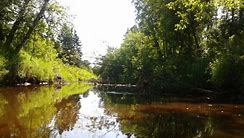
The commuting to and teaching at the University of Toronto was wearing on my Dad. Consequently, he packed up the family and moved us lock, stock and barrel to Thunder Bay. We ended up on Riverview Drive, and I, fortunately, had the Neebing River right across the street and down the bank from our newly built home. I found the new city terrifying, it was difficult to find new friends, and the Edgewater Park School was rich in bullies. The river became my solace, my wilderness, and my adventure. Like the Don River, the Neebing River was muddied with silt.
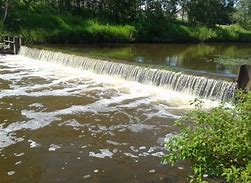
I started fishing the river that spring catching small Speckled Trout and snagging the occasional White Sucker. One day the Edward Street weir caught my eye. In the spring mostly men and boys fished in the turbulent water downstream of the metal weir. This weir obstructed the migration of lamprey upriver, but also prevented the Rainbow Trout from attaining the upstream pools. Here fathers and sons fished side by side, and in a way, I wished my Dad would join me, for he had a magnificent bamboo fly rod that he had used years before to catch the Carbondale River’s Cut Throat Trout. But he was extremely busy being a professor; so I fished alone.
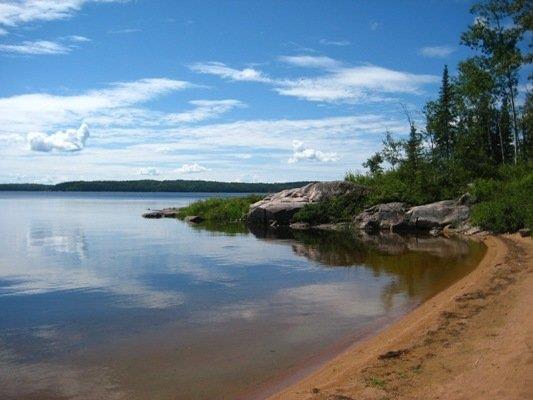
The next summer, as fortune would allow, Dad took a summer research position with the MNR near Kirkland Lake, Ontario. That summer he rented a log cabin on Round Lake for the family. He worked, and my brother, my two sisters and I stayed at the cabin with Mom. Fortunately, we had the red cedar stripe canoe, and Dad, bless his heart, had found a bit of time to carve us all canoe paddles of the right size. He colour-coded the paddles by lovingly painting blue, orange, or yellow stripes diagonally across the blades. My first real paddle was striped blue, and I cherished my Douglass Fir beaver-tail like pirate gold.
At Round Lake, we keep the red canoe turned over on the white sand beach just above the waterline. On calm mornings I would put on my lifejacket, a stiff bulky red affair with a broad uncomfortable collar. I was told it would float my face up in the event of capsizing. I would launch the canoe by turning it upright, and then drag it into the water before pushing off to go solo. I found that with my size and weight at the time, I could stand on the gunwales or bow deck of the 45-kilogram canoe without the remotest fear of flipping the canoe upside-down into the tepid waters of Round Lake. However, I had to be careful in the wind for the lake was big and a stiff breeze would easily have blown me out towards the middle of the lake into unknown peril. Therefore I only paddled on the calm waters near the beach and along the shore to a deep fishing hole underneath a nearby cliff. It is here at Round Lake where I began to become skilled in the arts of canoeing and fishing. That summer I excitedly landed my first big fish while solo canoeing. The perch was delicious, all four bits.
My Dad’s summer research work would take us to Round Lake over the next few summers. I would solo canoe mostly, fish, swim, and adventure into the surrounding forests to pick wild blueberries and strawberries. The summers past by quickly, I grew, and my canoeing skills improved. They say you need 10,000 hours to master something and by the end of the last summer at Round Lake my solo canoeing hours were in.
Paddle like Monet

River, River you hold my heart
You are my canvas
You are my art

I paint upon your watery canvas
My paddle brushing
As your surface prances

With my soul I artfully stroke
Your currents subtle
Down drops that soak

I surf and turn with mastery subtle
Your waves and eddies
In sculpted rebuttal

I ply your wild turbulent eddies
To control my float
That your current unsteadies

Like Claude Monet the impressionist
With every stroke, I turn and twist
This improvising canoe artist
Once I had the strength and size to portage the heavy red canoe down to the Neebing River, paddling became my summer pastime. I explored the muddy waters from above Smith’s Farm to Lake Superior. The river opened up both front country wilderness and back yard urbanism to a curious and inquisitive explorer.
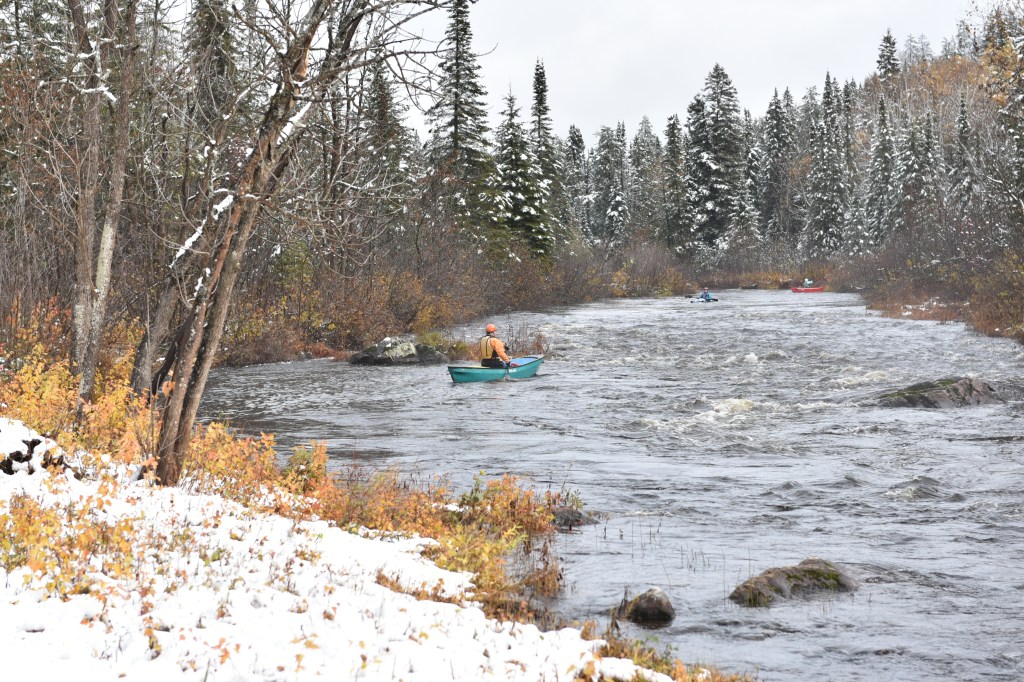
One remarkable day in 1972, while watching the Munich Olympics on the black and white television in our rec-room, I saw the whitewater slalom kayaking final from Augsburg, Germany. At that very moment, I knew I had to learn to kayak rapids. The kayak was so appealing and the paddlers danced harmoniously down the river using the features and turbulence to synchronously navigate the raging cascade with complete control. Subsequently, I dreamt of whitewater kayaking every night. After saving my paper route money and summer student pay for nine years, I was able to purchase my first kayak. With the support of the Thunder Bay Kayak and Canoe Club, my dream was fulfilled. I could begin to dance down the river like Rudolf Nureyev in Laurencia. The river and I have been together ever since.
Feel It
Feel the sun on your face
Feel the winds cool embrace
Feel the energy of the land
Feel the cold water on your hand

Feel the paddle in the water
Feel the canoe in current totter
Feel the pull of the eddy current
Feel the hull with knees subservient

Feel the drag of ascending force
Feel the canoe; keep it on course
Feel the heartbeat start to pound
Feel the brace through paddle downed

Feel the adrenaline rush so strong
Feel the elation as you paddle on
Feel the body give a shiver
Feel alive and love the river

By Bill Day
The End
 The Boy and the River
That is the most amazing read. Such Talent beautiful description very clear and concise makes you feel the experience without being there
Thank you for the escape especially in times like these where we are all quarantined 😊
LikeLike
Thank you for your kind reply. May you find your “river”.
Sincerely,
William
LikeLike