
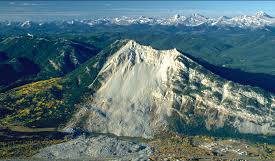
Some of my favourite memories of the mountains are the summers my family spent at Days’ Camp by the Carbondale River in the Crowsnest Forest. My father worked as a Forester for the Alberta Government Forest Service and spent his summers working in silviculture in the Lodgepole pine forests of the Crowsnest. In the summers, my family would pack up, leave Calgary, and move to the mountains. My Dad would motor up Highway 3 into the Crowsnest Pass. We drove through the small vibrant mining towns that were tucked along the mountain highway pass. Mom and Dad would stop at the Frank Slide and walk through the angular grey limestone rock-fall rubble to a cross made from threaded steel pipe. The cross was a monument that marked the tombs of the landslide victims who had been crushed beneath 110 million tonnes of mountain rocks that had slid off the face of Turtle Mountain in 1903. My parents informed me the slide only lasted 90 seconds and in these moments killed about 90 people. The southeastern corner of the town of Frank completely disappeared under the rubble. I remember standing on the gray rock looking at the slide scar on Turtle Mountain and wondering how a mountain could fall. The shatter zone was massive; I knew then that nature was both unpredictable and powerful.
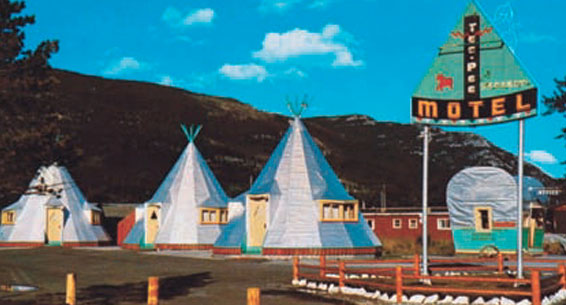
My other memory was of the Sleepee Teepee Motel in Blairmore, Alberta. The place fascinated the curiosity of a young boy. I always wanted to sleep in one of the teepees, but of course, never would. The teepees, the covered wagon, the cowboys, and the Indians became part of my fictional imagined boy self. At that age I could become anything I imagined. My dreaming, hoping and pretending became my defining quality. There were no limits.
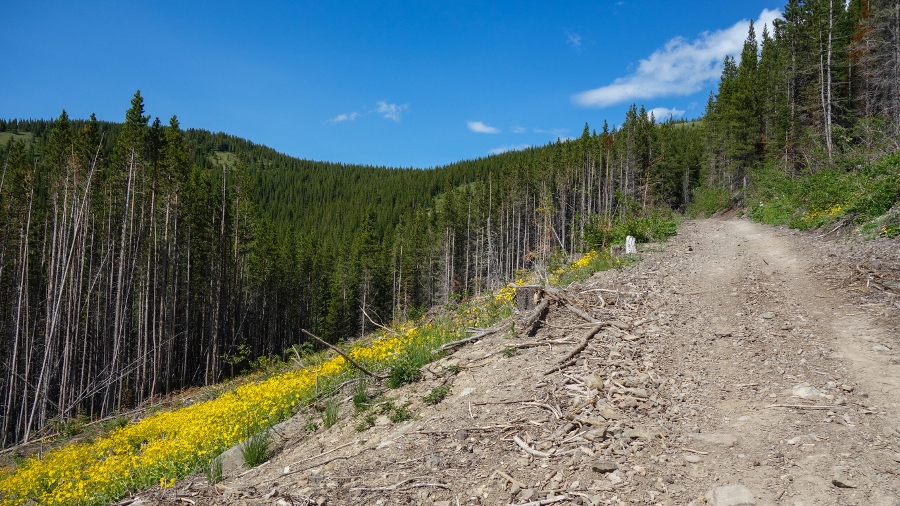
As usual, my parents stopped at Enzo Brazzoni’s Grocery in Bellevue for local news and supplies. Enzo was chatty, and my Dad would find out about the conditions of the logging roads into the Carbondale River valley, where the washouts were, how Enzo’s family was doing, and other local gossip of interest. We then packed the groceries and supplies into the truck and headed down the bouncy, narrow, twisting, and precipitous mountainside logging roads into the valley. My Dad would be on edge as he slowly drove the descending thin, dusty, and wash-boarded gravel road. At times the single-lane dirt road cut through a mountain rock-cut, edged the top of an endlessly steep drop-off on one side, and pressed up against a sheer impenetrable cliff on the other. Meeting a loaded logging truck was a constant fear and Dad was stressed the whole time as he creped down the switchbacks on his way into the valley.
When we arrived at Days’ Camp, the trailer was always waiting. I would run into the empty unit and proceed to get in the way as my parents unloaded the truck and began to sort out a summer’s worth of gear, clothing, bedding, kitchen stuff, non-perishable food, and cleaning supplies. I would be checking the closets and cupboards in the most unhelpful way. In the end, I was told to stop being a nuisance and was sent outside. Those summers I spent a lot of time outside, as I was imaginative, curious and busy. Adults seemed to find these qualities unbearable. Outside was wonderful, so I did not mind at all.
We lived on the bank of a glacial-fed mountain river, the Carbondale River. The trailer backed onto the river; the other side fronted on the dirt road, and across the road was a small hill with a flat cow pasture on top. My Dad had dug a well between the river and the trailer. With the aid of a hand pump, he was able to fill a water tank that he had precariously perched high up in a tall tree near the trailer. He had plumbed a water line into the trailer to provide pressurized water for the kitchen tap. The toilet was another matter.
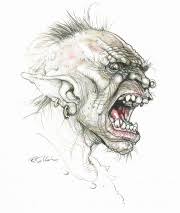
Going to the bathroom during the day was a fine adventure. The thunder-box was an open affair, with no walls or roof of any kind. The privy, as Dad called it, was a plank covered hole, dug into the gravelly soils in the woods up by the cow pasture across the road. You had to cross the road, climb the hill, sneak past the free-range cows, move only when the bull was not looking, and under the cover of the open pine forest go to the toilet. Easy, peasy! At night the journey was scary. Every boy knows that creepy stuff comes out at night. Dad, wanting me to learn to read, had been reading J.R. Tolkien’s The Hobbit aloud to me on summer evenings before bedtime. I mean, I knew there were trolls, dragons, orcs and creepy things waiting for me in the woods. At night the path to the privy was arduous, the cows massive, and the forest alive with moving shadows and strange sounds. Once I arrived at the privy, I had to worry about falling into the nasty privy pit. I imagined that a wicked goblin lived in the forest and wanted retribution for the treasure I had found. I soon realized that going to the privy at night should only be done in absolute emergencies.
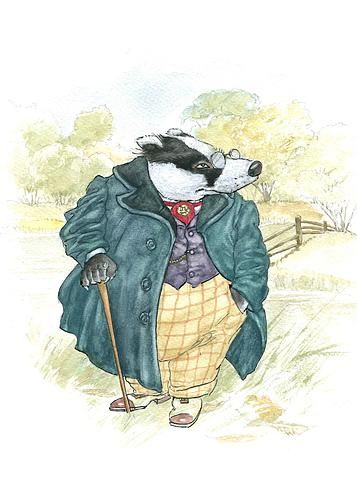
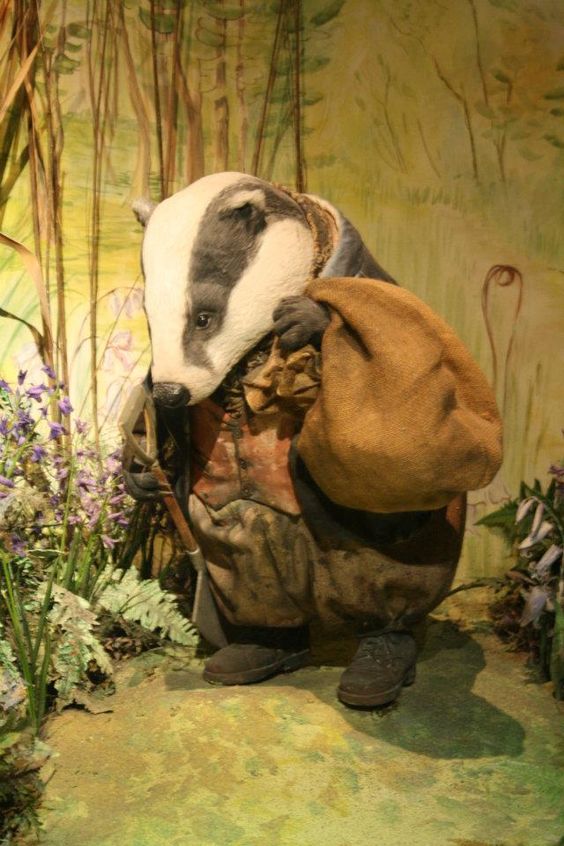
During the day I would play outside. My parents had shown me a badger hole that had been burrowed under the trailer. To keep me occupied they suggested that I watch the hole to see the badger. I quietly waited and watched while trying not to breathe like Wee Gillis stalking a stag. A few days passed with me trying to silently sit and watch the inactive burrow. Of course, I wanted to see the badger and my patience was waning so I hatched a plan.
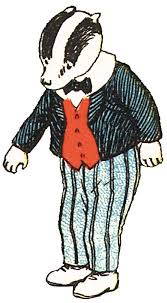
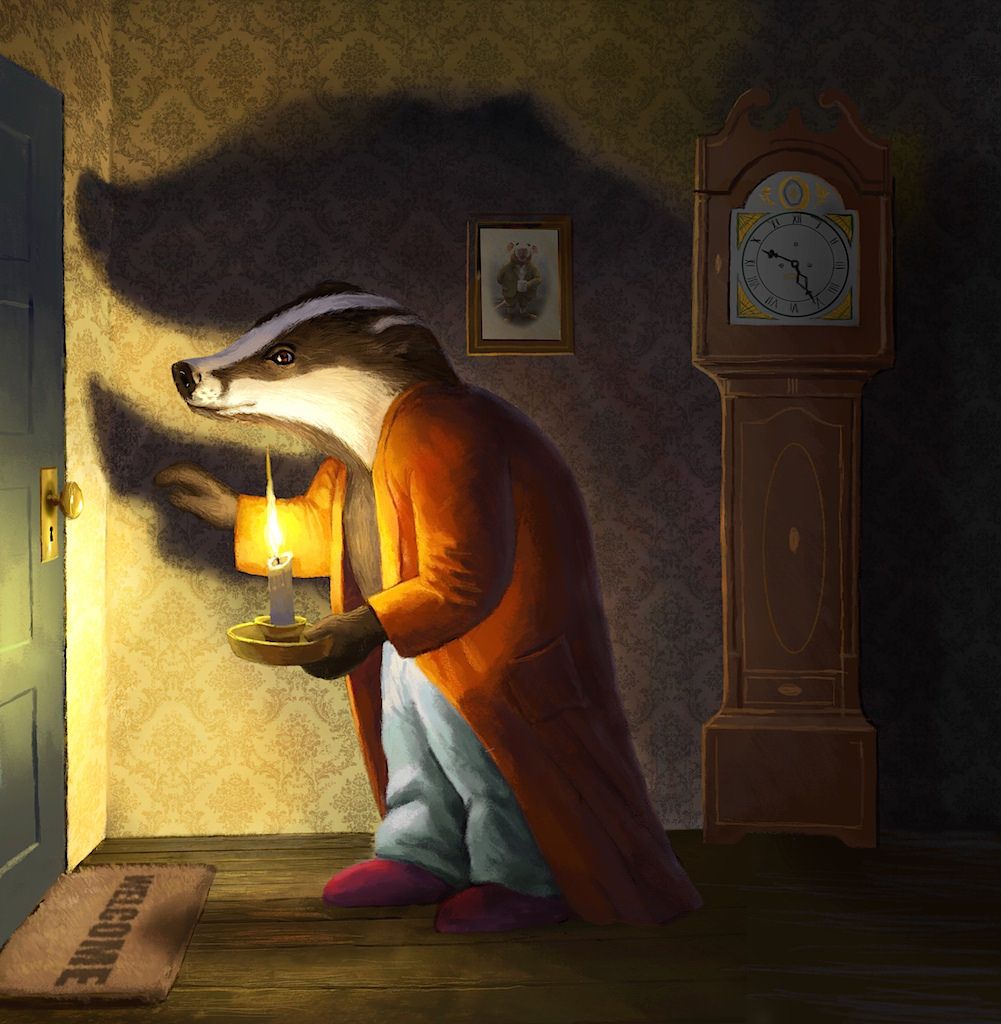
Mom had a pail for hauling water, and for doing laundry on the glass scrub board down by the river. I obtained the pail, ran down to the river, filled it with glacial water, then lugged it up the hill to the Badger hole, and poured it in. I spent a tiring morning and afternoon filling the burrow with water. I even started thinking that the Badger had moved on. So I went down to the river to fetch one last bucket of icy water, lugged it back up, and poured it into the hole. Well, up came the most terrifying animal I have ever met. The badger was furious. To say the least, she was pissed, wet, cold and very, very big. She looked like she had just awakened from her mid-day nap. She was nothing like the badger I had expected. Badger in Beatrix Potter’s Mr. Toad was much more pleasant; Badger in the Wind in the Willows was certainly more charming; Badger in Rupert the Bear was definitely more endearing than the wet, grumpy, and snarling old badger I had flushed out that day. She shook off the water, groomed her white facial stripe, gave me a nasty badger stare and plodded off. Badger and I parted company for good.
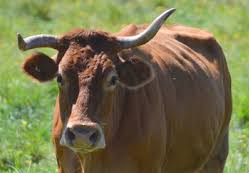
The other activity that occupied a lot of my spare time was hunting cows. One of the ranchers in the area had free-range cattle that would herd up on the pasture land near our trailer. I had to walk across the dusty road, up a tiny hill, and along the forested fringe to observe the herd. The cattle would be chewing their cud under the shade trees next to the field. They always had an enormous brown bull with them. Their protector had two unusually long horns and a massive shiny ring in his nose. He never took his eyes off of me, ever. The bull was formidable. I would pretend to hunt the cows. My brother and I would sneak through the grassy field moving slowly to avoid the cow paddies and startling the cows. Most of the time nothing terrible happened. Sometimes we stepped barefooted in a fresh cow paddy. The feeling the thick, soft, green, fermented ooze between the toes was nasty at the best of times. Sometimes if we managed to get too close to the cattle the bull would stand up and turn towards us, stopping us in our tracks.
One day I got the idea to throw stones at the cows. My brother, Ralph, and I had filled our pockets with round marble-sized river-stone ammunition, slithered our way towards the cows, subsequently stood and fired. The bull reacted immediately. He charged towards us, with his head down, and his eyes focused. We ran. When we arrived at the top of the hill, legs covered in cow paddy green, we could hear the snorting breath of the bull just behind us. As we toppled down the grassy hill towards the gravel road, we knew we were dead. Lying in a pile at the bottom of the hill, I remember seeing the massive bull standing at the top of the hill looking down at us in disdain. He was so big, so powerful, and so forgiving. The hunted had been victorious. The vanquished sheepishly walk away down to the river to clean our filthy cow paddy legs and soak our wounds. Hunting was over for the summer.
One day to my surprise a cowboy rode into our camp. He was a large strapping man wearing a black Stetson and his legs were protected by leather chaps. His rifle was sheathed in a leather holster and strapped to the side of his saddle. The horse was an appaloosa with pale fur and black spots. I was extremely timid and did not speak to him, for he was a true cowboy and I had messed with his cows. I wondered if he had heard about our hunt.
Like summer, the adventures ended. We took down our camp and headed home to the City of Calgary.

